Mosquito Control in Rhode Island: What Actually Works (and What Doesn’t)
Mosquito Control in Rhode Island: What Actually Works (and What Doesn’t)

If you live in Rhode Island or just over the line in southeastern Massachusetts, you already know the pattern. The yard is perfect in May. By the Fourth of July, you can’t sit on the deck past 6 p.m. without getting eaten alive.
We treat lawns from Cranston to Swansea all season, so we see what works in this region’s specific conditions, and what homeowners spend money on that does almost nothing. Here’s the honest version.
Rhode Island’s mosquito season, month by month
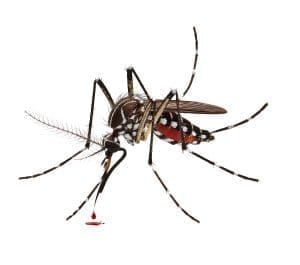 Mosquito activity here is driven by temperature and standing water, and our season is longer than most people think.
April and May: Overwintering mosquitoes wake up and the first generation hatches in vernal pools, clogged gutters, and anything that held snowmelt or spring rain. Populations are low but building. This is the highest-leverage month for prevention: every female eliminated now is thousands of eggs that never happen.
June: Numbers climb fast, especially after warm rains. Backyard container-breeding species (the ones that bite at dusk on your patio) get established.
July and August: Peak season. This is also when mosquito-borne disease risk is highest in our region, more on that below.
September and October: Activity continues until the first hard frost, which in Rhode Island typically doesn’t arrive until mid to late October. Warm falls stretch the season further. Late-season mosquitoes are fewer but the disease risk per bite is actually at its yearly high, because the viruses have had all summer to amplify in bird and mosquito populations.
The part that isn’t just about comfort
Southeastern New England isn’t a hypothetical disease-risk area. Bristol and Plymouth counties in Massachusetts are among the most historically active areas in the country for Eastern equine encephalitis (EEE), and Rhode Island’s Department of Environmental Management traps and tests mosquitoes across the state every summer, issuing findings for EEE and West Nile virus most years. When you see late-summer news about towns rescheduling evening sports practices, that’s why.
None of this is cause for panic; serious illness is rare. But it’s the reason we take August and September mosquito pressure seriously rather than treating it as a comfort issue, and it’s the reason evening protection matters most: the mosquito species of greatest concern here are most active from dusk onward.
What actually reduces mosquitoes
1. Eliminate standing water, relentlessly. This is unglamorous and it is the single most effective thing any homeowner can do. The container-breeding mosquitoes that ruin your patio time rarely travel more than a few hundred feet from where they hatched. That means your problem is usually breeding on your property or your neighbor’s: plant saucers, kids’ toys, tarps, clogged gutters, the birdbath nobody refreshes, the kiddie pool, the wheelbarrow behind the shed. A bottle cap of water can produce mosquitoes. Walk the yard weekly after any rain.
 2. Larvicide the water you can’t remove. Rain barrels, ornamental ponds, and drainage areas that stay wet can be treated with Bti dunks (a naturally occurring bacterium that kills mosquito larvae and nothing else). Safe around pets, birds, and fish, available at any hardware store, and cheap. Rain barrels in particular are a great practice we’ve recommended for years for garden watering; just screen the openings and dunk them.
3. Barrier treatments on vegetation. Adult mosquitoes don’t hover in the open all day; they rest on the undersides of leaves in shaded, humid vegetation: shrub lines, tall grass, ivy, the woods edge. A professional barrier treatment applies a residual product exactly there, killing mosquitoes where they rest and repelling new arrivals. This is the core of our program: three treatments per season, spaced 50 to 60 days apart, timed to cover the full April-to-frost window rather than one dramatic spray that fades in a week. Done properly, barrier treatment is the difference between “we can use the yard again” and everything else on this list.
4. Fans on the patio. Genuinely underrated. Mosquitoes are weak fliers; a box fan pointed across your seating area beats most candles and gadgets combined, and it costs nothing to try tonight.
What doesn’t work (save your money)
Bug zappers. Studies have consistently found mosquitoes make up a tiny fraction of what zappers kill. Mostly they electrocute moths and beneficial insects while your ankles still get bitten.
Ultrasonic repellers. No credible evidence they repel anything. Every independent test says the same thing.
Citronella candles alone. A slight effect immediately downwind of the candle, in still air. As a yard solution: no.
One-and-done fogging. A single DIY fogger knocks down the mosquitoes present that evening and has essentially no residual effect. New mosquitoes fly in from the neighbor’s yard within days. If you’re going to treat, residual placement and season-long timing are what matter. That is why our program is built around three properly spaced treatments, not one.
Mosquito-repellent plants. Citronella grass, marigolds, and lavender are nice plants. Sitting near them does not meaningfully protect you; the repellent effect requires crushing and concentrating the oils.
What about ticks?
Everything above concerns mosquitoes, but in this region the same shaded edges and tall vegetation harbor deer ticks, and Lyme disease is far more common here than any mosquito-borne illness. Our mosquito program doubles as flea and tick control for exactly that reason: the same perimeter-focused treatments target the vegetation and leaf litter where ticks quest for hosts. If your household includes kids, dogs, or anyone who gardens, the tick side of the treatment is arguably the more important half.
The bottom line for Rhode Island yards
Drain what you can, dunk what you can’t, run a fan, skip the gadgets. And if you want your yard genuinely usable from Memorial Day through October, a professionally timed barrier program is what does it. It’s a three-visit season here, not a one-spray fix, because our mosquito season is a six-month season.
4everGreen’s mosquito, flea, and tick program covers Rhode Island and southeastern Massachusetts: West Warwick, Cranston, Warwick, East Greenwich, North Kingstown, and over the line into Seekonk, Swansea, Rehoboth, and beyond. Every program starts with a free property analysis: we walk your yard, find the breeding and resting sites, and tell you what we’d do before you pay anything. Request your free property analysis or call/text 401.398.8850.