Rabbit Droppings in Your Yard: What They Mean and What to Do
Rabbit Droppings in Your Yard: What They Mean and What to Do

Rabbit droppings in your yard are a clear sign that rabbits are actively feeding and moving through your property. The pellets themselves are not a major health hazard to most people, but a consistent rabbit presence does signal the start of real lawn damage: gnawed grass crowns, chewed plant stems, and bare patches that leave your turf vulnerable heading into the season.
Here is how to identify what you are looking at, understand what it means for your lawn, and decide what to do about it before the damage compounds.
What Do Rabbit Droppings in a Yard Actually Look Like?
Rabbit poop is small, round, and firm, roughly the size and shape of a garden pea. The pellets are typically dark brown to black and dry out quickly. You will usually find them scattered in clusters, not in a single pile, because rabbits move while they graze. They tend to concentrate near the edges of the lawn where it meets garden beds, shrub borders, or areas with taller grass and brush. Deer droppings are clustered and more oblong. Rodent droppings are smaller and pointed at the ends. If you are finding small, uniform round pellets spread across your grass, rabbits are almost certainly the source.
Does Rabbit Poop on a Lawn Pose a Health Risk?
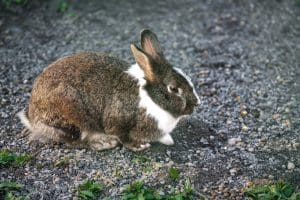 he short answer is: minimal, but not zero. Rabbit droppings do not transmit the same pathogens that make dog or cat waste genuinely hazardous. They do not carry roundworm or toxoplasmosis. However, rabbit feces can harbor E. coli and Salmonella in some cases, and rabbits can carry ticks, which are a real concern across Rhode Island and southeastern Massachusetts from roughly April through November. If young children play on the lawn, or if you have pets that graze or roll in the grass, washing hands and keeping an eye on the affected areas is reasonable practice.
The bigger practical risk is not the droppings themselves. It is what the droppings tell you: rabbits are grazing your lawn regularly, and wherever they graze, damage follows.
What Lawn Damage Does Rabbit Activity in a Yard Actually Cause?
Rabbits clip grass blades at ground level and chew stems cleanly, leaving a cut that looks almost like it was done with scissors. In spring, when cool-season turf in southern New England is actively pushing new growth, this kind of repeated grazing can thin turf and expose soil. Left unaddressed, those thin spots become entry points for weeds, crabgrass, and opportunistic grassy invaders later in the season.
The damage is often worse in early spring and late fall, when food sources elsewhere are scarce and rabbits concentrate on whatever green growth is available. Lawns in Cranston, Warwick, Coventry, and similar suburban areas bordered by scrubby brush or wooded lots tend to see the heaviest rabbit pressure because rabbits shelter at the edge and feed on the open lawn.
Beyond the grass itself, rabbits will strip the bark from young trees and shrubs during winter and early spring, which can kill a plant outright. If you are finding gnaw marks on woody stems near the soil line alongside the droppings, the rabbit population on your property is established and actively foraging.
Is Rabbit Poop Actually Good Fertilizer?
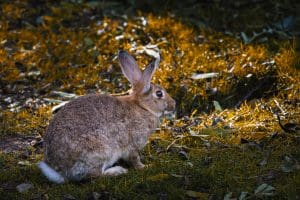 This comes up often, and it deserves a straight answer. Rabbit droppings are high in nitrogen and decompose relatively quickly compared to other animal waste. In a compost pile, they have genuine value. Scattered across an active lawn, the effect is negligible. The volume of droppings from a few foraging rabbits is not enough to meaningfully fertilize a turf area, and using it as justification to leave a rabbit problem unaddressed would be a mistake. A properly maintained fertilization program, timed to your lawn’s actual needs through the season, delivers far more consistent results than incidental rabbit activity.
How to Tell Whether You Have a Passing Rabbit or a Problem
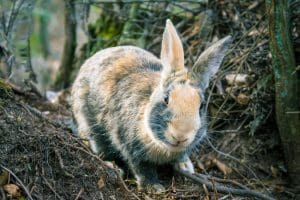
A few droppings near the edge of the yard on one morning may mean a rabbit passed through overnight. An ongoing rabbit problem looks different: you will find fresh pellets repeatedly in the same zones over multiple days, you will see gnaw patterns on grass and plants, and you may spot the animals themselves at dawn or dusk when they are most active. Burrow areas or matted grass in a sheltered corner of the yard are also a sign that rabbits are not just visiting but living nearby.
If the droppings are reappearing in the same spots consistently, and you are starting to see thinning or cropped grass in those areas, you are past the “passing through” stage and into a management situation.
What to Do About Rabbits in Your Yard
Physical deterrents are the most reliable first step. Rabbit fencing (hardware cloth buried a few inches below the soil and extending at least two feet above ground) protects garden beds and tree wells effectively. Motion-activated sprinklers can discourage feeding in open lawn areas. Reducing brush piles, tall grass at the margins, and low dense shrubs removes the cover rabbits depend on for shelter adjacent to your lawn.
Repellent sprays exist and can buy time, but they require reapplication after rain and are more appropriate for garden beds than open turf. For properties with persistent, recurring rabbit activity, professional wildlife management services offer more systematic solutions. The 4everGreen team provides wildlife and pest defense services for Rhode Island and southeastern Massachusetts properties that go beyond what a box-store repellent spray can accomplish.
On the lawn care side, the most important thing you can do after a season of rabbit grazing is restore the turf where it has been thinned. Bare or weak spots left by repeated grazing are exactly where crabgrass and broadleaf weeds take hold. In southern New England, fall is the strongest window for aeration and overseeding on cool-season turf, when soil temperatures are still warm enough to support germination but competition from summer weeds has dropped. Repairing rabbit damage in fall sets the lawn up to thicken before the following spring.
If crabgrass is already a concern in the affected areas, a pre-emergent application timed to soil temperature in spring can prevent a second problem from compounding the first. The same is true for grub control: thin turf stressed by rabbit activity is more susceptible to grub damage because there is less root depth to lose. Grub preventative treatments in southern New England need to go down in spring before egg hatch, well ahead of any visible late-summer damage. Calling after sod starts lifting in August is too late to use a preventative product.
When to Call a Professional
 If rabbit droppings are appearing repeatedly, you are seeing lawn thinning or plant damage, or you want a complete picture of what is affecting your property, a professional evaluation makes sense. 4everGreen Turf Management starts every engagement with a free property analysis: a technician walks your yard, identifies grass and soil types, and spots existing pest, weed, or disease pressure before any product goes down and before you are charged anything. That first conversation costs you nothing and gives you a clear picture of where your lawn stands.
For properties across Cranston, Warwick, East Greenwich, Bristol, and into southeastern Massachusetts towns like Seekonk, Rehoboth, and Attleboro, the combination of suburban lot edges, mild winters, and active tick populations from April through November means rabbit and pest management is rarely a one-and-done fix. A program approach that addresses the lawn’s health alongside the pest pressure gives lasting results.
To schedule your free property analysis or ask about rabbit and wildlife management services, call 4everGreen Turf Management at 401.398.8850.
Frequently Asked Questions
Are rabbit droppings in the yard dangerous to dogs or cats?
Rabbit droppings pose a low but real risk to pets. Dogs that eat rabbit feces can pick up intestinal parasites in some cases. More importantly, rabbits carry ticks, and tick activity in Rhode Island and southeastern Massachusetts runs roughly April through November, with nymph activity peaking in early summer. If your pets spend time in areas with heavy rabbit activity, check them regularly for ticks and talk to your vet about appropriate prevention.
Will rabbit poop hurt my grass?
The droppings themselves will not damage grass. The rabbits leaving them will. Repeated grazing clips grass at the crown, thins turf, and opens the door to weed invasion. The droppings are simply the most visible sign that this grazing is happening consistently. Focus your concern on the lawn damage pattern rather than the pellets.
What smells or repellents keep rabbits off a lawn?
Commercial repellents containing predator urine or capsaicin can discourage rabbits from feeding in treated areas, but they require regular reapplication, especially after rain. They work better on garden beds than on open turf. Physical exclusion fencing around vulnerable plants is more reliable for long-term protection. For larger properties or persistent problems, professional wildlife management services provide more durable solutions.
How do I know if it is rabbits and not some other animal leaving droppings?
Rabbit pellets are small (roughly pea-sized), round, uniformly shaped, and dry out to a firm texture. They appear in loose clusters across an area, not in one pile. Deer droppings are larger and more oblong. Rodent droppings are smaller and tapered at both ends. Finding pellets clustered near lawn edges, garden beds, or shrub borders is the most common rabbit pattern in suburban Rhode Island and Massachusetts yards.
When is the best time to repair lawn damage caused by rabbits?
Fall is the strongest window for lawn repair in southern New England. Cool-season turf germinates well when soil is still warm from summer but air temperatures have dropped, which describes September into early October in Rhode Island and southeastern Massachusetts. Aeration followed by overseeding into those thin areas gives new grass time to establish before winter. Spring repair is possible but competes with weed germination pressure, making weed management a necessary companion step.

Reviewed by Mike Mansour, Co-founder and Operations Manager, 4everGreen Turf Management.
Mike helps Rhode Island and southeastern Massachusetts homeowners solve lawn and pest problems year-round.